

📋 In This Guide
- Why Retractable Sunroofs Matter for Melbourne Patios
- How They Improve Comfort in Melbourne’s Heat
- Sunroofs vs. Fixed Awnings vs. Other Shade Solutions
- Melbourne Weather & Performance: UV, Heat, Wind, Rain
- 🛠 Interactive: Find Your Ideal Shade Solution
- Building Regulations & Permits in Melbourne
- Design & Aesthetics for Your Patio
- Motorised vs. Manual Operation
- Material & Structural Requirements
- Durability, Maintenance & Long-Term Care
- Safety for Families, Pets & High-Traffic Patios
- Budget & Long-Term Value
- Strata & Shared Space Considerations
- Installation Process & Timeline
- Customisation & Design Options
- Frequently Asked Questions
- Get Expert Advice from Melbourne Shade Systems
A retractable sunroof for patio is the single most effective upgrade a Melbourne homeowner can make to reclaim their outdoor living space all year round. It blocks extreme summer UV, reduces heat load on interior rooms, and retracts completely when you want open sky — all from a motorised remote or a smart-home app. This guide covers everything you need to know: Melbourne’s climate realities, material and structural requirements, council compliance pathways under Victoria’s planning framework, and how to choose the right solution for your specific patio. No vague generalities — just practical, actionable guidance grounded in the Victorian residential building landscape as of May 2026.
Why Retractable Sunroofs Matter for Melbourne Patios
Melbourne’s climate is simultaneously its greatest outdoor living asset and its biggest challenge. With summer temperatures regularly exceeding 38°C in areas like Toorak, Glen Waverley, and Essendon — and a UV Index that climbs above 11 (Extreme) from November through March — an unshaded patio becomes genuinely unusable for weeks at a time. The Cancer Council Australia classifies UV Index 11+ as requiring maximum sun protection, meaning an unshaded patio poses a real health risk, not just a comfort inconvenience.
Unlike a fixed pergola or static canopy awning, a retractable sunroof adapts to Melbourne’s notorious weather variability — the same day can bring 35°C sunshine at noon and a cool southerly change by 3pm. Retractable systems let you open up for winter sun and close against summer heat, giving you an outdoor room that performs across every season.
Year-Round Usability
Extend patio use by an estimated 30–40% more days per year compared to an unshaded outdoor space.
Interior Cooling
Shading west- and north-facing glass doors reduces indoor temperatures, lowering reliance on air conditioning.
Property Value
A professionally installed, permit-compliant outdoor shade solution is a recognised value-add in Melbourne’s residential market.
Design Cohesion
Modern retractable systems integrate with contemporary and heritage architecture — slim aluminium profiles complement both styles.

The Pergotex II retractable patio roof — full rain and sun protection without sacrificing open-sky access. Available from Melbourne Shade Systems.
How Retractable Sunroofs Improve Outdoor Comfort in Melbourne’s Heat
The comfort improvement delivered by a retractable sunroof for patio works across three distinct mechanisms. First, direct solar radiation is blocked before it heats the patio surface — meaning the thermal mass of concrete or timber decking remains cooler. Second, UV-rated fabric or polycarbonate panels reduce perceived temperature in the shaded zone by 8–15°C in peak sun conditions, a figure consistent with studies by the CSIRO on outdoor thermal comfort. Third, by shading adjacent glass sliding doors and windows, the system reduces solar gain into interior rooms, lowering air-conditioning demand.
The Science Behind Shade and Heat Reduction
Radiant heat — which Melbourne homeowners feel as the oppressive, direct heat of the sun — accounts for the majority of discomfort on exposed patios. A solution-dyed acrylic fabric with a UPF rating of 50+ blocks up to 98% of UVA and UVB radiation. This isn’t just sunburn protection; blocking UV radiation dramatically reduces the infrared heat that warms surfaces. Mesh fabrics rated at 5% openness allow airflow while filtering heat — critical in Melbourne’s hot northerly winds.
Airflow and Ventilation Under a Retractable System
A well-designed retractable sunroof preserves natural ventilation — a critical consideration in Melbourne’s climate. Unlike a solid fixed roof that traps heat, retractable systems can be partially deployed or fully opened when a cooling southerly arrives. Look for systems like the Pergotex II that incorporate ventilation channels, or pair your patio roof with sunscreen mesh blinds on the perimeter to control airflow directionally.
Retractable Sunroofs vs. Fixed Awnings vs. Other Shade Solutions: What’s Right for Your Patio?
Melbourne homeowners frequently ask how a retractable sunroof for patio compares against the range of available awnings and shade solutions. The answer depends on your patio configuration, budget, and whether you need weather protection or purely solar shading. Here’s an honest, structured comparison:
| Solution | Overhead Cover | Retractable | Rain Protection | UV Protection | Best For |
|---|---|---|---|---|---|
| Retractable Sunroof | ✔ Full overhead | ✔ Yes | ✔ Yes (PVC/poly) | ✔ UPF 50+ | Medium–large patios, year-round use |
| Folding Arm Awning | Partial / angled | ✔ Yes | ✘ Limited | ✔ Yes | Wall-mounted, smaller patios, balconies |
| Fixed Pergola | ✔ Full overhead | ✘ No | Partial (slats) | Partial (slats) | Permanent structure, minimal maintenance |
| Door / Canopy Awning | Entry only | Some models | ✔ Yes | ✔ Yes | Entry protection, small overhangs |
| Shade Sail | Partial angled | ✘ Usually fixed | ✘ No | ✔ Yes | Pool areas, freestanding gardens |
| Pergola Shade System | ✔ Full overhead | ✔ Yes (retractable) | Partial (fabric dependent) | ✔ UPF 50+ | Existing pergolas, conservatories |
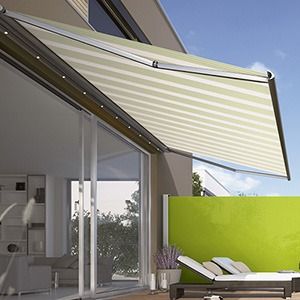
Weinor Cassita II — Retractable Patio Roof
With its slim, purist design, the Cassita II integrates seamlessly with modern Melbourne home architecture. Motorised operation, wind-sensor compatible, and available in a wide range of fabric options.
View Product →For Melbourne’s residential context, a retractable pergola sunroof system offers the best combination of weather protection, adaptability, and design integration. The folding arm awning remains the most popular choice for wall-mounted applications — particularly for east- and north-facing patios in suburbs like Hawthorn, Camberwell, and Kew where heritage guidelines can restrict structural additions. A door awning or window canopy protects entry points and smaller covered areas efficiently.
Melbourne Weather & Performance: UV, Heat, Wind, and Rain Considerations
UV and Heat
Melbourne’s UV Index is classified as Extreme (11+) during most of summer — meaning unprotected outdoor exposure causes damage in under 10 minutes. Solution-dyed acrylic fabrics (such as those from Dickson, Sattler, or Serge Ferrari) offer UPF 50+ and are engineered to resist colour fade for 5–10 years under Australian conditions. Lighter colours reflect more radiant heat; darker colours can absorb and re-radiate. For maximum comfort in Melbourne’s hot summers, light grey, ivory, and pale sand fabrics outperform dark charcoal for heat management.
Wind Performance
Melbourne’s exposure to sudden southerly changes and the occasional 90km/h+ gust requires particular attention to wind ratings. Retractable systems should comply with National Construction Code (NCC) Volume 2 wind load requirements for Victoria’s wind region (Region A for most metropolitan Melbourne, Region C for coastal Mornington Peninsula and exposed bayside areas). High-quality motorised systems — including those from Weinor — integrate wind-sensor technology (Somfy WindoMatic or equivalent) that automatically retracts the awning when wind speeds exceed a set threshold. This is the single most important operational feature for Melbourne installations.
Rain and Water Runoff
PVC-coated fabrics and polycarbonate panels provide full waterproofing and are the right choice if rain protection is a primary requirement — common for alfresco dining areas in Melbourne’s unpredictable spring and autumn. Solution-dyed acrylic fabrics resist mould and mildew but are not fully waterproof; they shed light rain but will allow water penetration in heavy downpours unless treated with a DWR (durable water repellent) finish. All retractable sunroof installations must incorporate adequate drainage channels and guttering to direct water runoff away from the structure and comply with the Victorian Building Authority’s plumbing standards.
Find Your Ideal Retractable Shade Solution
Answer 6 quick questions to get a personalised recommendation for your Melbourne patio — including relevant compliance considerations.
What is your patio size and configuration?
What is your primary comfort goal?
Is your property strata-managed?
What operation style do you prefer?
What’s your aesthetic preference?
Do you have an existing pergola frame or is this a freestanding installation?
Residential Building Regulations & Permits for Retractable Sunroofs in Melbourne
Understanding your compliance obligations before installation is essential — and the good news is that many retractable awning and sunroof installations are exempt from a building permit under Victoria’s planning framework. Here is what Melbourne homeowners need to know as of May 2026.
Building Permit Exemptions — NCC and Victoria Planning Provisions
Under the Victorian Building Authority (VBA) guidelines and the National Construction Code (NCC 2022, adopted in Victoria), a retractable shade structure attached to a residential Class 1a dwelling is typically exempt from a building permit where:
- The structure does not create an enclosed habitable room or alter the building’s weatherproofing envelope;
- The floor area covered does not exceed 10 m² (or 20 m² where additional height conditions are met) under Regulation 87 of the Building Regulations 2018 (Vic);
- The structure is not on a sloping or unstable site requiring additional engineering;
- The installation does not affect fire-resistance levels, sound insulation, or energy efficiency performance required by the NCC;
- The existing wall or structural element to which it is attached is adequate to carry the imposed loads (wind, dead load of fabric, frame).
Planning Permits and Heritage Overlays
If your property is in a Heritage Overlay, Design and Development Overlay, or Neighbourhood Character Overlay under the Victoria Planning Provisions, the design, colour, and extent of any external shade structure may be subject to council review. Key Melbourne councils with Heritage Overlay areas include the City of Boroondara (Camberwell, Hawthorn, Kew), City of Port Phillip (St Kilda, Port Melbourne, Albert Park), City of Stonnington (Toorak, Prahran, Malvern), and City of Yarra (Fitzroy, Collingwood, Richmond).
In these cases, choosing a discreet, low-profile retractable system — such as a cassette awning that conceals all hardware when retracted — significantly improves the likelihood of council approval. Your installer should provide drawings and product specifications to support your planning application.
Council Approval Timeline
For applications requiring council planning permits in Victoria, allow 30–90 days depending on the complexity of the application and whether objections are raised. Straightforward applications in non-sensitive overlays are typically processed within 30–60 days under the Planning and Environment Act 1987 (Vic). Heritage overlay applications may require referral to Heritage Victoria, extending timelines. Your Melbourne Shade Systems consultant can advise on documentation requirements.
Design & Aesthetics: Creating a Cohesive Look for Your Melbourne Patio
A retractable sunroof for patio should feel like an intentional extension of your home’s architecture, not an afterthought bolted to the wall. Melbourne’s residential streetscape covers everything from Federation-era brick villas in Malvern to minimalist concrete homes in Hawthorn East and contemporary coastal builds in Brighton — each requiring a different aesthetic approach.
Fabric Selection and Colour
Fabric choice is the most visible design decision. Solution-dyed acrylics are available in hundreds of colourways from suppliers such as Sattler, Recasens, and Tempotest. For contemporary Melbourne homes, neutrals — warm whites, greys, charcoals, and sandy tones — work across architectural styles and show less soiling over time. Striped patterns can reference traditional canvas awning heritage and suit period-style homes in Fitzroy and Northcote.
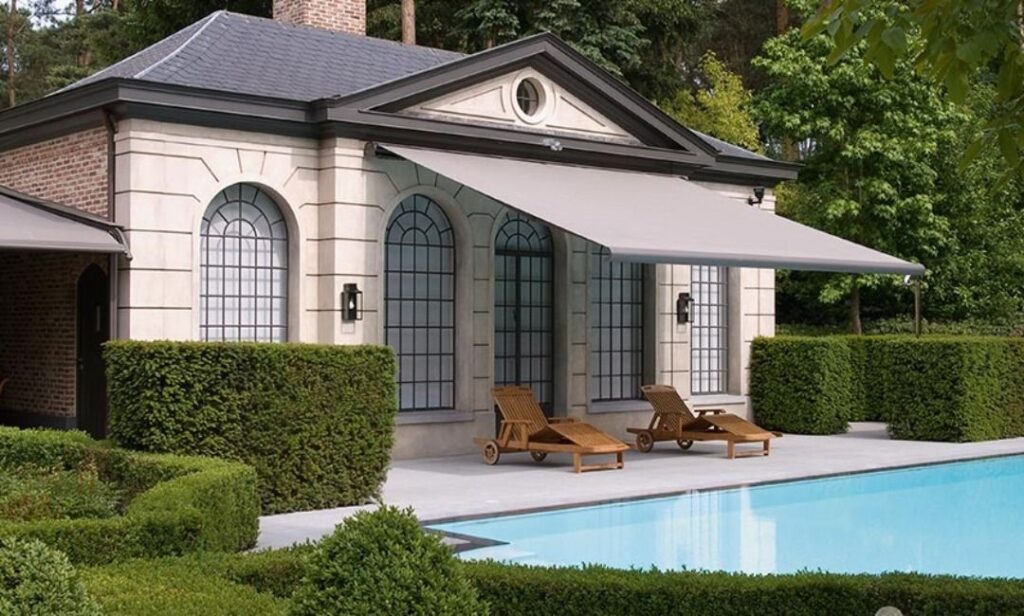
The Weinor Opal Design II — a cassette awning with timeless design suited to contemporary Melbourne homes. The cassette housing completely protects the fabric when retracted.
Frame and Hardware Finishes
Powder-coated aluminium extrusions are the standard for quality retractable systems — Colorbond-matched finishes allow you to co-ordinate with existing gutters, fascias, and door frames. In coastal Melbourne suburbs (Elwood, Brighton, Hampton), marine-grade anodised aluminium is worth specifying for long-term corrosion resistance. Avoid zinc-plated hardware in coastal environments — the salt-laden air accelerates oxidation significantly.
Integration With Existing Architecture
Wall-mounted retractable systems require structural fixings into the building fascia or a dedicated steel bracket. Heritage properties often require non-invasive fixing solutions or external structural frames to avoid masonry damage. Our team at Melbourne Shade Systems assesses your existing structure and provides engineering-backed fixing specifications for all installations. See our range of conservatory and pergola shade systems for options designed to integrate with existing roofing structures.
Motorised vs. Manual Operation: What’s Right for Your Patio?
This is one of the most common questions Melbourne homeowners ask — and the honest answer is that motorised operation is worth the investment for most residential patios above 4 metres in width, or any patio used frequently. Here’s a structured breakdown:
Motorised
Remote, wall switch, smartphone app, or smart-home integration (Google Home, Amazon Alexa, Apple HomeKit). Wind-sensor auto-retract protects against Melbourne’s sudden southerlies. Best for large spans, high-use patios, and anyone who wants set-and-forget convenience.
Manual
Crank handle or pulleys. No electrical installation required — lower upfront cost. Perfectly reliable for smaller patios and less-frequent use. Requires physical operation every time. No auto-retract on wind.
For motorisation, Melbourne Shade Systems works with leading motor systems including Somfy, Becker, and the LINX Automation system — the latter offering advanced smart-home integration and programmable sun/wind sensors purpose-built for the Australian climate. Electrical installations must comply with AS/NZS 3000 (Wiring Rules) and be carried out by a licensed electrician in Victoria.
Material & Structural Requirements for Residential Retractable Sunroofs
Selecting the right materials ensures your retractable sunroof performs across Melbourne’s wide seasonal range — from the heat and UV of a January scorcher to the cold, wet conditions of July. Here are the key structural and material considerations for Victorian residential installations as of May 2026.
Frame Materials
Powder-coated aluminium is the industry standard for residential retractable systems — lightweight, corrosion-resistant, and available in virtually any colour. European-manufactured systems from brands like Weinor use high-grade aluminium extrusions that comply with EN 13561 (European standard for external blinds) as a quality benchmark. For coastal Victorian properties, specify marine-grade anodising on all aluminium components.
Fabric Options
Three principal fabric types are used in retractable patio sunroofs:
- Solution-dyed acrylic (e.g. Sattler, Recasens): UV-stable, breathable, mould-resistant. UPF 50+ available. Best for solar shading with airflow. Not fully waterproof without DWR treatment.
- PVC-coated polyester: Fully waterproof, easy to clean. Best for all-weather enclosures and alfresco dining areas. Heavier, less breathable — can trap heat in summer.
- Open-weave mesh (sunscreen fabrics): 3–15% openness factor. Allows airflow while filtering UV. Ideal for hot northerly conditions in Melbourne’s western and northern suburbs (Footscray, Essendon, Sunshine).
Structural Load Requirements
Under the NCC 2022, retractable shade structures attached to a residential building must be designed to withstand the relevant wind loads for their location and exposure category. In metropolitan Melbourne (Region A, Terrain Category 2.5–3), this typically means a design wind speed of 38–45 m/s for typical residential structures. Any structure requiring engineering verification should be assessed by a licensed structural engineer and certified accordingly. The VBA’s building permit application process requires engineering documentation where structural adequacy cannot be demonstrated by deemed-to-satisfy provisions.
Durability, Maintenance & Care for Long-Term Performance
A retractable patio sunroof installed professionally with quality materials requires relatively low maintenance — but a regular care routine will extend its service life significantly in Melbourne’s demanding climate.
Routine Maintenance Schedule
- Monthly (during high-use season): Inspect fabric for bird droppings, leaves, and debris. Brush off dry debris before wetting — rubbing embedded grit into fabric causes premature wear.
- Every 3–6 months: Wash fabric with a soft brush and warm water with a mild, pH-neutral detergent. Rinse thoroughly. Allow to dry fully before retracting — retacting wet fabric promotes mildew growth, particularly in autumn.
- Annually: Lubricate articulated arms and pivot points with a PTFE (Teflon-based) spray lubricant. Check all fixings for tightness, particularly after Melbourne’s storm season (November–March). Inspect motor and cabling connections if motorised.
- Every 5–7 years: Professional service inspection — assess fabric wear, hardware fatigue, and motor performance. Consider fabric replacement if UV degradation is visible (chalky appearance, colour fade).
Safety Considerations for Families, Pets & High-Traffic Patios
Safety is a genuine consideration for residential patios — particularly where children and pets are present. Quality retractable systems incorporate safety features that address the most common risks.
- Pinch-point guards: Motorised systems must comply with AS 60335.2.97 (Safety of household and similar electrical appliances — automatic gate, door, and window operator safety). Reputable systems include obstacle-detection stops that prevent the motor from operating if obstruction is detected.
- Wind-load engineering: A structurally engineered installation that complies with NCC wind load requirements is essential — particularly where the patio is adjacent to play areas. Under-engineered fixings that fail in high wind create a serious falling hazard.
- Child-lock on motorised controls: Wall-mounted remote controls should be positioned out of reach of young children, or specified with a key-lock function.
- Glass roof considerations: The Weinor WGM Sunroof — designed for installation above glass roofs — should be specified with laminated safety glass compliant with AS 1288 if overhead glass panels are involved in the installation.
Budget & Long-Term Value: ROI and Cost Considerations
A retractable sunroof for patio represents a meaningful capital investment — and one that delivers ongoing returns in three distinct ways: reduced energy costs, extended property usability, and demonstrated value in Melbourne’s residential property market.
Energy Savings
Shading north- and west-facing glass reduces solar heat gain through glazing — one of the principal sources of summer cooling load in Melbourne homes. The Your Home technical manual (Australian Government) documents that effective external shading of glazing reduces cooling energy demand by 25–50% in temperate-to-hot climates. For a Melbourne home with a ducted air conditioning system, this represents a material ongoing saving.
Property Value
Licensed shade systems that are permit-compliant and professionally installed are recognised as a property improvement in Victorian real estate valuations. Estate agents in Melbourne’s inner and middle ring suburbs consistently note that a functional, well-designed alfresco area — particularly one with an all-weather cover — adds tangible appeal and supports asking prices.
General Cost Framework
Without quoting specific prices (which depend on span, system type, motorisation, site complexity, and other variables), the general investment hierarchy for residential retractable shade solutions in Melbourne runs from manual folding arm awnings at the entry level, through motorised folding arm systems, to retractable pergola sunroof systems at the premium end. Contact Melbourne Shade Systems for a free, site-specific quotation — no two installations are the same, and accurate pricing requires an on-site assessment.
Strata & Shared Space Considerations for Apartment Dwellers
For Melbourne apartment dwellers and townhouse owners in strata-managed developments, installing a retractable sunroof or awning on a balcony involves an additional layer of approval. Under the Owners Corporations Act 2006 (Vic) and the model rules applicable to most Owners Corporations in Victoria, any alteration to a lot that affects common property or changes the external appearance of the building requires committee approval.
Getting Strata Approval
- Submit a written application to your Owners Corporation committee, including product specifications, colour swatches, installation drawings, and structural load documentation.
- The committee must respond within 28 days under the Act (with provision for extension to 60 days in complex cases).
- Approval conditions may restrict fabric colours to those that match existing installations across the building, or require a certified installer.
- Internal balcony awnings that do not project beyond the balcony edge or affect the building facade may be treated differently by some committees — confirm this with your building manager before purchasing.
Installation Process & Timeline Expectations
Understanding the installation journey helps Melbourne homeowners plan confidently. Here is what to expect from a professional residential retractable sunroof installation with Melbourne Shade Systems:
- Initial Consultation & Site Assessment (1–2 hours): On-site measurement, structural assessment of fixing points, discussion of product options and compliance requirements.
- Design & Quotation (3–7 days): Custom drawings, product specifications, and a detailed quotation are prepared. For complex or large projects, engineering documentation is commissioned.
- Permit Application (if required — 30–90 days): Documentation is submitted to council or VBA as applicable. Simple exemption-eligible installations proceed directly to manufacture.
- Custom Manufacture (3–6 weeks): Most quality retractable systems are custom-manufactured to your specific dimensions. European lead times may be longer during peak periods.
- Installation (1–2 days typically): Professional installation by certified technicians. Electrical connections for motorised systems are coordinated with a licensed electrician.
- Commissioning & Handover (half day): System is tested, remote or app is configured, sensor thresholds are set, and you receive a full operating and maintenance guide.

The Ares folding arm awning — European-designed full cassette system, custom manufactured for Melbourne homes.
Customisation & Design Options for Retractable Sunroofs
One of the strongest advantages of working with Melbourne Shade Systems is access to a genuinely wide range of customisation options across fabric, frame, motorisation, and control systems. Every installation is manufactured to your specific patio dimensions — there are no off-the-shelf size constraints to work around.
Customisation options available for residential retractable sunroof and awning systems include:
- Fabric type (acrylic, PVC, mesh, clear PVC), colour, and pattern from an extensive range of Australian and European suppliers
- Frame powder-coat colour matched to Colorbond or custom RAL colours
- Valance and pelmet design — straight edge, scalloped, or profile-cut
- Cassette housing options (full cassette, semi-cassette, or open-roll) for different aesthetic and protection requirements
- LED lighting integration for evening use — particularly popular in entertainer’s patios in bayside suburbs
- Motorisation brand and control protocol — Somfy io-homecontrol, Becker, or LINX for smart-home ecosystems
- Sensor packages (wind, sun, rain) for automated operation
For homeowners integrating their patio shade solution with a broader outdoor living project, also consider pairing with clear PVC bistro blinds for perimeter enclosure, or sunscreen mesh blinds on vertical faces to control glare and heat from low western sun — a common challenge on Melbourne’s west-facing patios from 3pm onwards in summer.