
Shade Sail vs Pergola: Which Is the Right Choice for Your Australian Home?
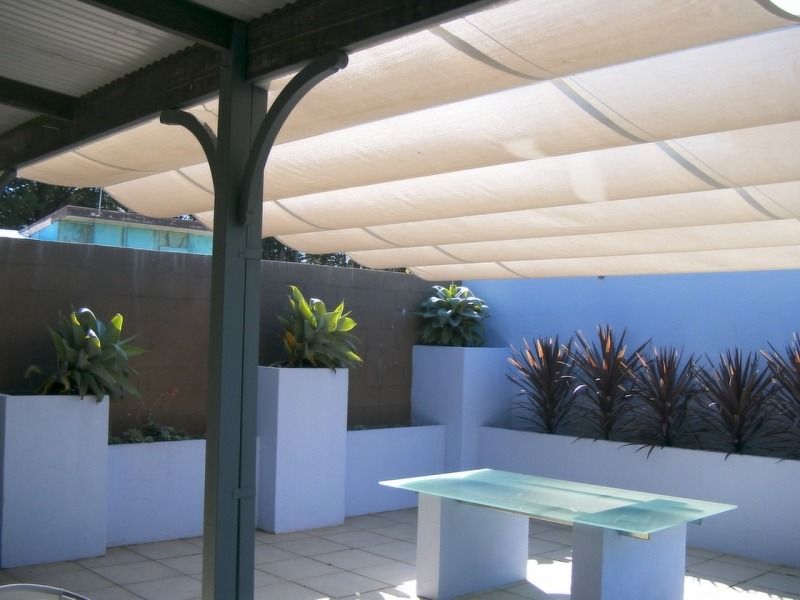
The short answer: A shade sail is your most affordable, flexible, and quickest path to outdoor UV protection — ideal for smaller budgets and versatile spaces. A pergola (especially fitted with quality pergola awnings) is a permanent, property-adding structure that handles year-round weather far better. The right choice depends on your budget, your climate, how much your outdoor space needs to do, and whether you want a temporary or forever solution.
Every Australian homeowner with an outdoor space eventually faces this decision. The sun’s brutal, the backyard’s underused, and you want to do something about it — but should you go with a shade sail or commit to a full pergola build? It’s not always a simple answer. After all, both options have real merit, and the wrong choice can cost you thousands of dollars and years of regret.
In this guide, we cut through the noise with an honest, detailed breakdown of the shade sail vs pergola debate — covering costs, longevity, installation, UV protection, council approvals, and which solution actually suits different Australian climates. We’ll also walk you through how to install a shade sail if you decide that’s your route, and explain when pergola awnings are the smarter long-term investment.
What’s Actually the Difference? (Beyond the Obvious)
Most people know a shade sail is a tensioned fabric panel and a pergola is a freestanding or attached structure. But the real differences go deeper than that:
🌤️ Shade Sail
- Tensioned HDPE fabric panels anchored to posts or fixed points
- Available in triangles, squares, rectangles, and custom shapes
- Portable — can be packed down and removed
- Provides UV protection (up to 97%+ with quality fabric)
- Does not provide full rain coverage
- Relies entirely on its anchor points for structural integrity
- Relatively quick to install and relocate
🏗️ Pergola
- Permanent or semi-permanent structural framework (timber, steel, or aluminium)
- Can be open-top (beams only), lattice-covered, or roofed
- Weather protection depends entirely on the roofing choice
- Significantly higher cost but also adds property value
- Often paired with pergola awnings for flexible cover
- Generally requires a builder or experienced tradie
- May require council development approval
Cost Comparison: What Are Australians Actually Paying in 2025–2026?
Cost is usually the first question — and rightly so. Here’s a frank breakdown of what Australians are spending on each option in the current market:
| Factor | Shade Sail | Pergola (with Awning) |
|---|---|---|
| Entry Level | $400–$900 (DIY kit, small area) | $3,000–$6,000 (basic timber, small) |
| Mid Range | $1,000–$3,000 (professionally installed) | $8,000–$18,000 (aluminium with louvre/awning) |
| Premium | $3,000–$6,000+ (commercial grade, complex) | $20,000–$45,000+ (fully insulated, motorised) |
| DIY Feasibility | High (small sails, flat terrain) | Low-Medium (needs structural knowledge) |
| Ongoing Costs | Replacement every 5–10 years, cleaning | Occasional repainting, awning fabric replacement |
| Property Value Uplift | Minimal | Moderate to significant |
| Council Permit Cost | Often exempt (check locally) | $300–$1,500+ (DA dependent) |
How Do They Handle Australian Weather? (The Honest Truth)
Australia doesn’t have one climate — it has about six. What works brilliantly in Noosa may be completely wrong for Melbourne’s four-seasons-in-a-day weather. Here’s how each solution stacks up across different conditions:
UV Protection
Both options can deliver excellent UV protection — but the mechanism differs. Quality shade sails use UV-stabilised HDPE fabric that blocks up to 95–98% of UV radiation, consistent with Cancer Council Australia guidelines for effective shade structures. A timber pergola with open beams alone provides almost no UV protection — you need a shade cloth, polycarbonate roof, or awning membrane to get meaningful UV blocking.
Rain Coverage
This is where pergolas — particularly those fitted with quality pergola awnings — clearly win. A tensioned shade sail is not waterproof. Even high-quality knitted HDPE fabric is semi-permeable — it will shed light drizzle but won’t keep you dry in a proper downpour. If year-round usability through rain events matters to you, a pergola with a solid or waterproof awning roof is the better investment.
Wind Performance
Wind is where shade sails need to be treated with real respect. Shade sails must comply with local wind load requirements under AS 4055 Wind Loads for Housing. An improperly tensioned or undersized anchor point is a genuine safety hazard. In cyclone-prone regions (North QLD, NT, parts of WA), specialist engineering advice and cyclone-rated fixings are essential. For high-wind zones, well-engineered pergola structures anchored with proper footings will generally outperform shade sails.
Australian Climate at a Glance
☀️ QLD / NT / Top End
- Extreme UV — both solutions need to block hard
- Cyclone season requires engineering-rated fixings
- Humidity and monsoonal rain favour permanent pergola roof
- Shade sails must be rated for high wind zones
🌦️ VIC / SA / NSW
- Variable weather — shade sails great for summer
- Winter rain means shade sail = reduced use off-season
- Pergola with awning allows year-round entertaining
- BASIX compliance may be relevant in NSW new builds
🔥 WA
- Extreme heat and UV in Perth summers
- UV-rated shade sails effective and popular
- Fremantle Doctor winds — proper tensioning critical
- Louvre pergola awnings popular for heat management
🌿 ACT / Alpine VIC
- Cold winters limit outdoor season
- Shade sails best in shoulder seasons
- Pergola with enclosed awning = usable year-round
- Snow load rarely relevant but worth checking locally
How to Install a Shade Sail: A Step-by-Step Guide
If you’ve decided a shade sail is your move — great choice for many Australian backyards. Here’s a realistic breakdown of how to install a shade sail properly. Note: for sails larger than about 25m² or in complex configurations, we always recommend professional installation.
- Plan Your Layout and Anchor Points Decide where the sail will sit and identify your anchor points — steel posts, a wall, a fence, or a tree. The anchor points determine the shape, size, and tension angle of your sail. Aim for at least 20–30° pitch so rain runs off rather than pooling. Sketch it out to scale before purchasing your sail.
- Source Your Materials You’ll need: your shade sail, stainless steel D-shackles or carabiners, turnbuckles (one per corner), stainless steel eye bolts (if wall-mounting) or post brackets, and concrete for footings if installing posts. Always use marine-grade stainless steel hardware — galvanised fittings rust and fail in Australian coastal and UV conditions.
- Install Steel Posts or Wall Brackets For freestanding posts: dig holes to at least 600mm depth (or 1/3 of the post height) and set in concrete. Use 75mm or 100mm RHS steel posts for medium-sized sails — never timber for main structural posts in high-tension applications. For wall-mounting: use appropriately rated anchor bolts into masonry, not standard screws. Have a structural engineer specify the bracket rating if in doubt.
- Attach Turnbuckles and Connection Hardware Fix a stainless steel D-shackle through the eye bolt or post bracket at each anchor point. Attach a turnbuckle to each shackle. Turnbuckles are what you’ll use to fine-tune the tension — they allow adjustment without repositioning the entire sail.
- Hang the Shade Sail Starting from the highest anchor point, clip the sail’s corner rings onto the turnbuckles using D-shackles. Work around all corners before applying any significant tension. With a helper, temporarily support the middle of the sail to prevent tearing during hanging.
- Tension the Sail Evenly Progressively tighten each turnbuckle in rotation — do a little on each, then repeat. Never fully tighten one corner before the others. The sail should be drum-tight with a consistent catenary curve on each edge. Inadequate tension causes pooling, flapping, and hardware stress. Recheck tension after 48 hours as the fabric beds in.
- Inspect and Certify (If Required) For large installations or high-wind areas, have a builder or structural engineer inspect your installation. Document it for your records. In some states, large shade sails require a certificate of compliance — check with your local council or a building certifier.
Pergola Awnings: When the Upgrade Is Worth Every Dollar
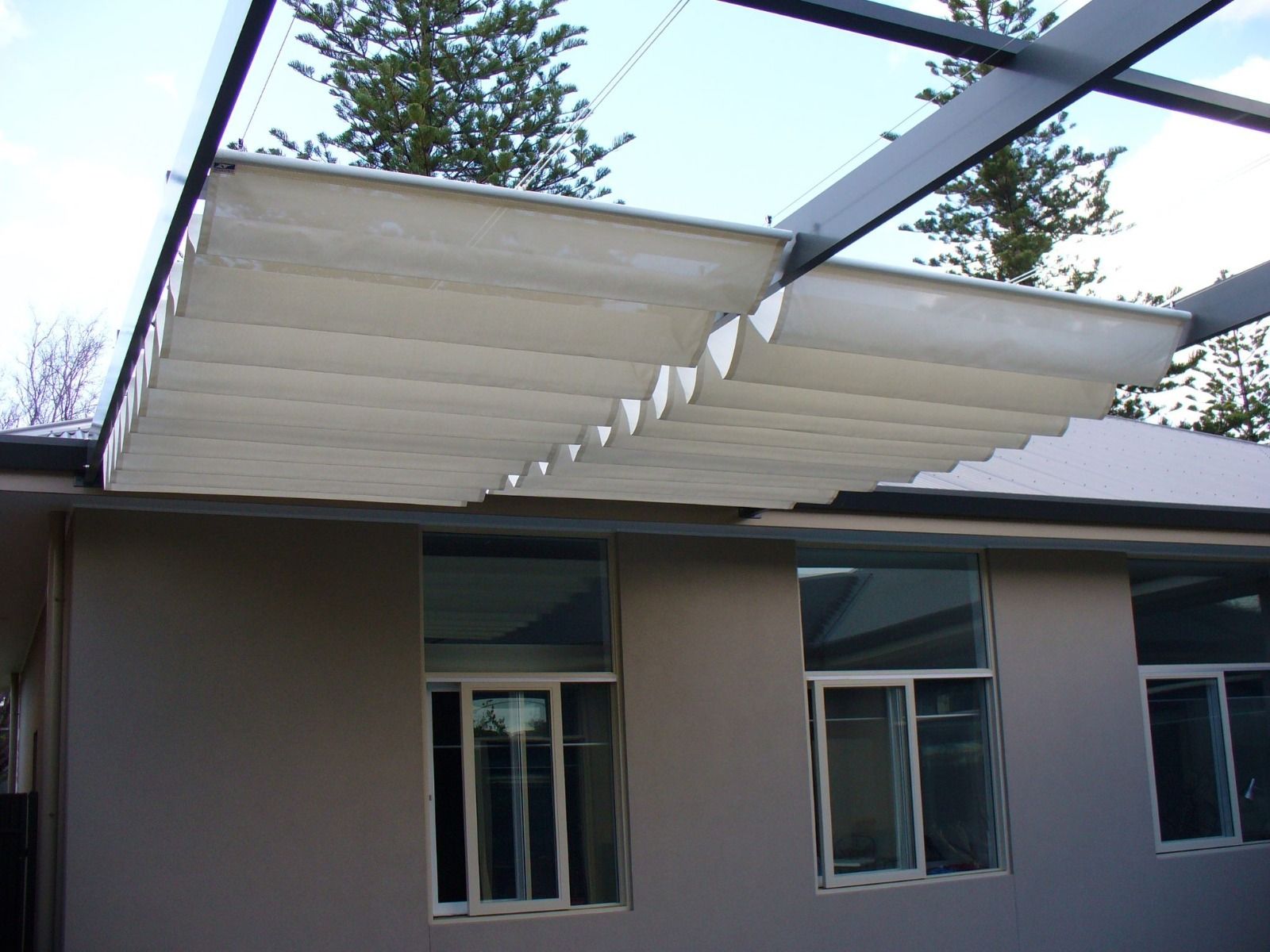
The shade sail vs pergola debate often gets settled at the point where Australians start thinking seriously about entertaining year-round. And that’s where pergola awnings become the decisive solution.
A pergola awning isn’t just a cover — it’s a climate-control system for your outdoor space. Retractable awning systems let you open up the sky on a perfect winter morning and close it down when the afternoon westerly comes howling through. Fixed awnings provide permanent, weatherproof cover with no moving parts to worry about. For alfresco areas where you’re serious about entertaining, it’s genuinely difficult to go past the versatility of a quality pergola awning system.
Types of Pergola Awnings Worth Knowing About
- Retractable Folding Arm Awnings: The most popular choice for pergola decks and patios. Motorised or manual operation. Extends over your outdoor space and retracts fully when not needed.
- Fixed Straight-Drop Awnings: Provides permanent side protection and can be combined with a roof system for full enclosure. Great for blocking afternoon sun on west-facing patios.
- Louvre Roof Systems: Adjustable aluminium blades that rotate to control light, airflow, and rain. Premium option but genuinely outstanding for Australian conditions.
- Polycarbonate or Insulated Roof Panels: Fixed, weatherproof pergola roofing that turns an outdoor space into a near-indoor room. Maximum protection, lower flexibility.
- Shade Cloth Pergola Tops: A cost-effective hybrid — uses the pergola frame but installs a shade sail-style fabric on top for UV blocking without full rain cover.
Pro tip from the industry: The most popular pergola upgrade we see Australian homeowners making? Adding outdoor blinds to the sides of their pergola in combination with an awning roof. It effectively creates a fully enclosed, weatherproof outdoor room that’s usable 12 months a year — which is the dream for most Australian entertainers.
Longevity and Maintenance: What to Realistically Expect
Neither option is truly “set and forget” in Australian conditions. Here’s what you’re actually signing up for in terms of maintenance over time:
Shade Sail Maintenance
- Lifespan: 5–10 years for quality HDPE fabric; lower-grade fabrics 3–5 years
- Clean twice yearly with mild detergent and soft brush — never pressure wash (breaks fibres)
- Remove during storms, hail events, and extended periods of no use
- Inspect hardware quarterly — replace any corroded fixings immediately
- Re-tension as needed, especially in the first season as fabric beds in
- Store correctly when removed — dry, out of UV, rolled not folded
- Replacement cost factored into long-term budget planning
Pergola Awning Maintenance
- Structure lifespan: 20–30+ years for quality aluminium or steel; timber needs regular sealing
- Awning fabric lifespan: 8–15 years depending on material and UV exposure. PVC/polyester fabrics are typically 5–10 years
- Annual inspection of motor (if motorised), arms, and fabric
- Clean fabric with mild soapy water — avoid harsh chemicals on acrylic fabrics
- Touch up any paint or powder coat chips on the structure promptly
- Lubricate moving parts annually on retractable systems
- Get motor serviced approximately after 3–5 years for motorised awnings
Do I Need Council Approval? The Australian Regulatory Reality
This is one of the most Googled questions in the space — and for good reason. Getting it wrong can mean a costly removal order or insurance issues. Here’s the general lay of the land across Australian states, though you must always verify with your specific local council before installing anything:
- Shade Sails (most states): Generally exempt development if under approximately 20m², height under 3m at the highest point, setback from boundaries maintained, and not in a heritage overlay. Must meet structural requirements regardless of permit status.
- Pergolas — VIC: Exempt if under 40m², not in a bushfire management overlay, and complies with ResCode. Larger or more complex structures require a building permit.
- Pergolas — NSW: Complying development under SEPP (Exempt and Complying) for structures under specific dimensions. BASIX may apply if incorporated into new builds. Check your LEP and council DCP.
- Pergolas — QLD: Exempt if under 10m² in certain zones; larger structures need building approval. Check your local government area specifically.
- Pergola Awnings: Retractable awnings on existing structures are often exempt; fixed awnings that alter the roofline may need a permit. Check with your council.
- Heritage overlays / flood zones: Additional restrictions apply — always check before assuming exempt development applies.
Which One Actually Looks Better? The Design Conversation
Aesthetics matter — and this is genuinely subjective. But there are some real trends worth understanding as you make your decision.
Shade sails have moved well beyond their early 2000s industrial look. Today’s residential shade sails come in a sophisticated palette — deep charcoals, warm naturals, slate blues, olive greens, and clean whites that complement contemporary Australian architectural styles. A well-configured multi-sail arrangement with carefully chosen hardware can be genuinely beautiful. The key is working with the geometry of your space rather than against it.
Pergolas with quality awnings anchor an outdoor space architecturally — they create a defined room, not just a shaded area. This suits larger backyards and homes where you want a strong design statement. The variety of framing materials (kwila timber for warmth, powder-coated aluminium for modern minimalism, Corten steel for industrial-luxe) means there’s a pergola aesthetic for every home style.
The honest design verdict: shade sails suit modern, flexible, and compact spaces. Pergolas define and ground a larger outdoor room. Both can look excellent — the difference is intent and scale.
Frequently Asked Questions: Shade Sail vs Pergola
Is a shade sail or pergola better for a small backyard?
For tight spaces, a shade sail is usually the smarter choice. It uses vertical anchor points rather than floor space, it’s visually lighter, and it’s significantly cheaper. A pergola in a small backyard can feel overwhelming and may actually reduce the sense of openness. That said, a compact pergola with a retractable awning over an elevated deck or patio can work well if designed thoughtfully.
Can I put a shade sail over my existing pergola?
Yes — and this is actually a very popular hybrid approach. If your pergola frame is structurally sound and the attachment points are load-rated appropriately, a shade sail can be tensioned across the pergola frame to provide UV-blocking cover without the cost of a full roof. Have a builder or installer assess your frame’s capacity before attaching any tensioned load.
How long do shade sails last in Australian conditions?
Quality shade sails made from UV-stabilised, solution-dyed HDPE fabric will typically last 5–10 years in Australian conditions with proper care and seasonal storage. Budget sails (often imported with lower UV stabilisation) may degrade significantly within 3–4 years. Coastal locations (salt air) and tropical Queensland conditions can accelerate fabric and hardware degradation — factor this into your budget planning.
What wind speed can a shade sail withstand?
A properly engineered shade sail installation should be designed to comply with AS 4055 Wind Loads for Housing for your specific wind region. In practice, a correctly tensioned and properly anchored shade sail can handle moderate to strong winds (up to approximately 80–100km/h in many residential installations), but should be removed before cyclones, severe storms, or sustained high-wind events. Never leave a shade sail up in forecast severe weather.
Do pergola awnings add value to your property?
Yes — consistently. Well-designed, professionally installed pergolas with quality awning systems can add between 5–15% to a property’s sale value, according to industry estimates from real estate professionals. The key is quality of execution and relevance to the local market. In lifestyle-oriented markets (coastal, inner-suburban), a beautiful outdoor entertaining space is one of the highest-return improvements you can make.
Can I install a shade sail myself or do I need a tradie?
Small shade sails (typically up to about 16–20m²) with straightforward attachment points — wall to post, post to post — can be installed by a confident DIYer with proper preparation. However, structural post installation, wall bracket specification for high-tension loads, and anything requiring footing design really should involve a professional. For larger sails, complex configurations, or high-wind zones, professional installation is strongly recommended for safety and warranty purposes.
The Verdict: Shade Sail vs Pergola — Use This Decision Framework
Still not sure? Use this quick guide to find your answer:
- Budget under $5,000 and want shade this season → Shade Sail. Fast, effective, great value.
- Want to entertain year-round including in rain → Pergola with awning. Non-negotiable for weather coverage.
- Renting or planning to move in the next few years → Shade Sail. It’s removable and portable.
- Building your forever home and want to add value → Pergola. The property investment that pays back.
- Have a small courtyard or townhouse → Shade Sail. Architecturally lighter, space-efficient.
- Large alfresco area with big entertainment ambitions → Pergola Awning System. Worth every dollar.
- Unsure about council requirements → Talk to a professional before spending anything.
The real beauty of this decision in 2026 is that you’re not locked into a binary choice. Shade Systems Australia works with homeowners across the full spectrum — from cost-effective shade sail installations through to premium pergola awning systems that transform outdoor spaces entirely. Getting the right expert advice for your specific space and budget is always the smartest first step.